Flat roof
Roof with a fall (fall layer)
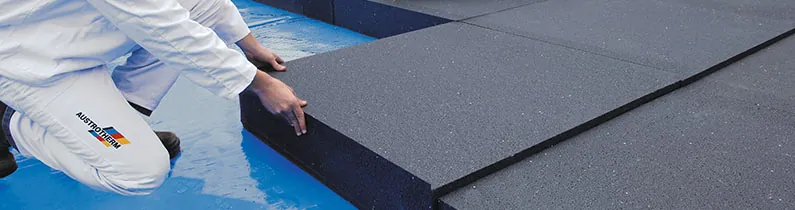
In the past the fall (slope layer) of a flat roof was usually made as a layer of cement screed, lightweight concrete or concrete, placed either on the structure or on the insulation (below the finish). The main drawback of these materials is that it is a "wet" process that needs drying time. It also needs machinery (which adds cost), the work depends on the weather (water and moisture from rain can stay in the structure and evaporate for a long time), and installation errors are likely.
As building materials improve, so do building methods: Austrotherm d.o.o. already offers the "two in one" principle — insulation that is at the same time the fall layer of the flat roof!
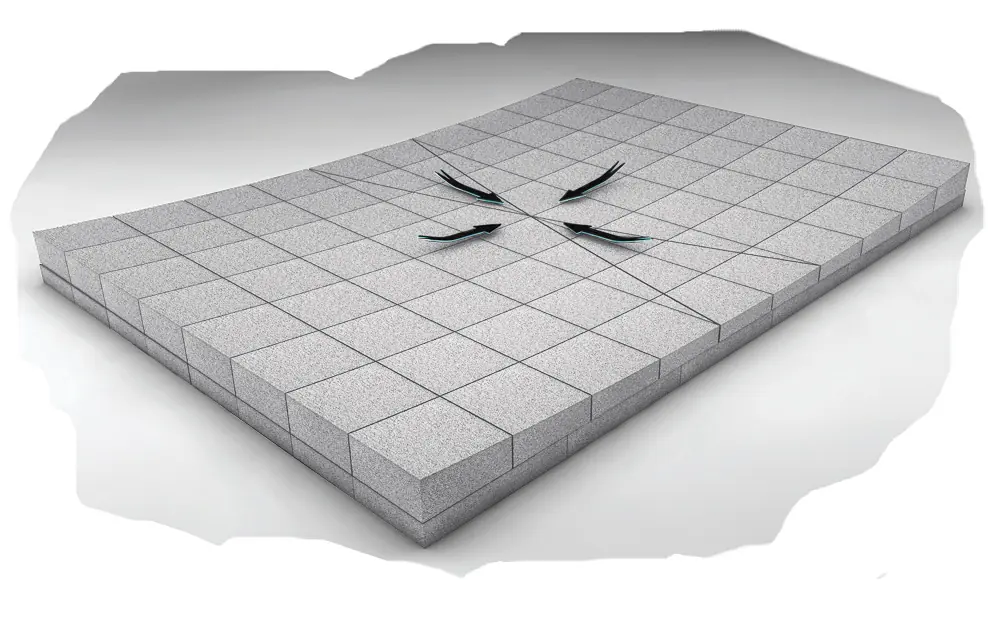
The EPS boards are cut to order for each flat-roof plan — both for the designed insulation thickness and for the slope. After the vapour barrier has been laid on the reinforced concrete slab, to keep vapour and moisture out of the insulation, the insulation is installed. The two hardest Austrotherm EPS grades are used for this: Austrotherm EPS® 120 and Austrotherm EPS® A150; which one depends on the design load.
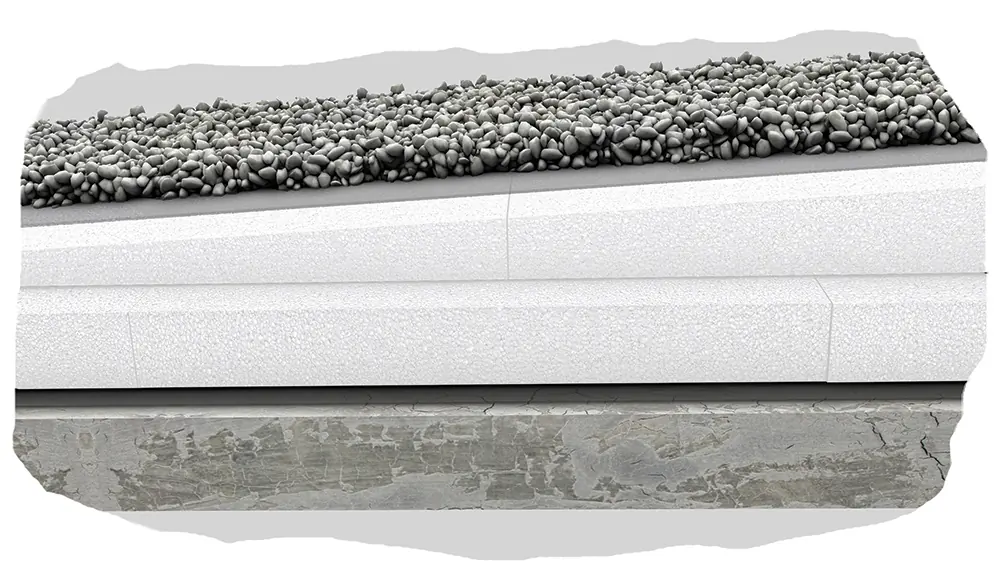
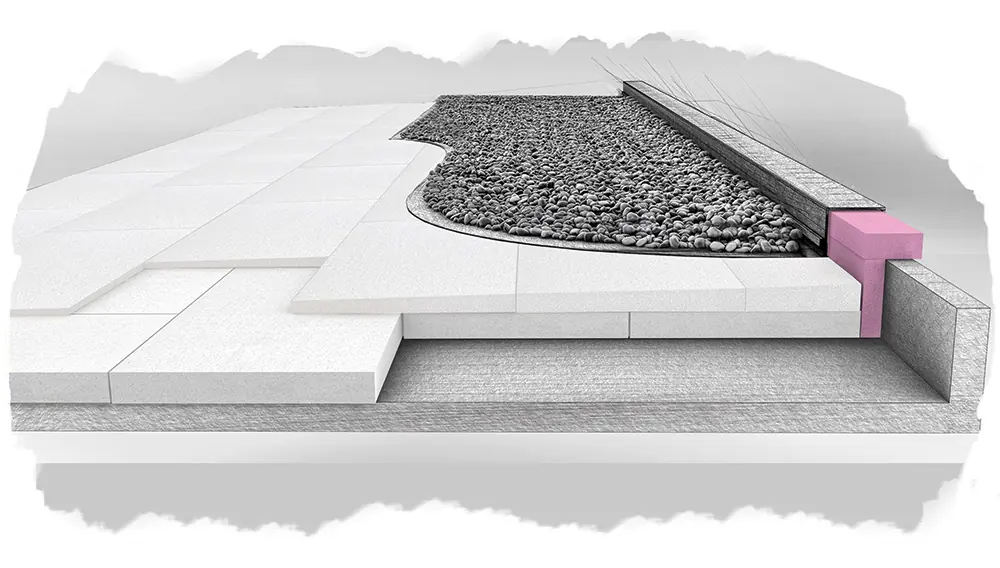
The boards are laid in two levels: the lower level of standard flat boards (rectangular section), the upper level of tapered boards (trapezoidal section). The thickness of the flat boards in the lower level is set for each building according to the required minimum insulation thickness. The slope of the upper boards follows the specified fall, i.e. the geometry of the roof and the exact positions of all outlets.
Standard sizes of the tapered boards: 500 mm x 1000 mm, 1000 mm x 1000 mm and 1000 mm x 1250 mm.
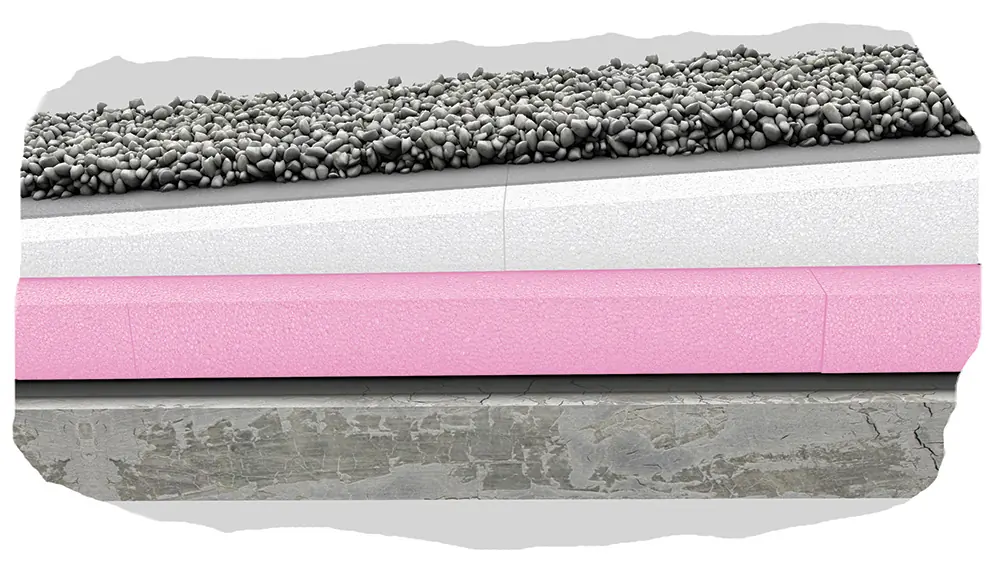
Alternatively, Austrotherm XPS® TOP 30 can be used in the lower level instead of standard EPS boards — a more expensive option with all the known advantages of our pink boards.
A geotextile is laid over the insulation, then gravel ballast, or a waterproofing membrane (PVC or EPDM).
Advantages of forming the fall with the insulation
- ekonomičnost (ušteda u materijalu, vremenu rada, tj. generalno novčana ušteda)
- značajno olakšana konstrukcija u odnosu na konstrukciju sa krovnim padom formiranim u cementnoj košuljici
- veća preciznost u radu (manja mogućnost greške pri postavljanju)
Recommended products
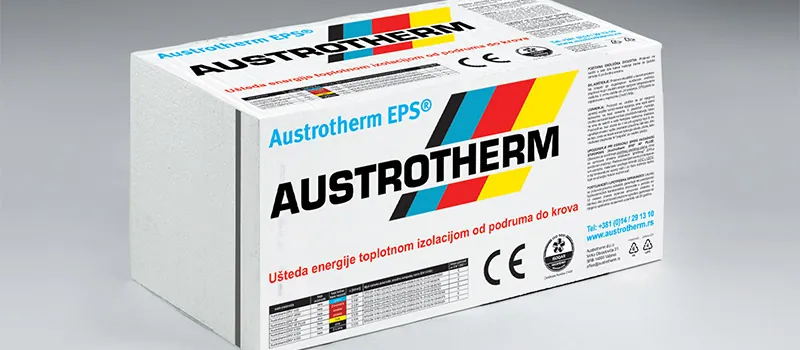 EPS / EPS PLUS
Austrotherm EPS A120
Thermal insulation board of expanded polystyrene (EPS)
- λ
- 0.034 W/mK
- Compressive strength
- 120 kPa
- Permitted load (2%)
- 30 kPa
- Fire class
- E
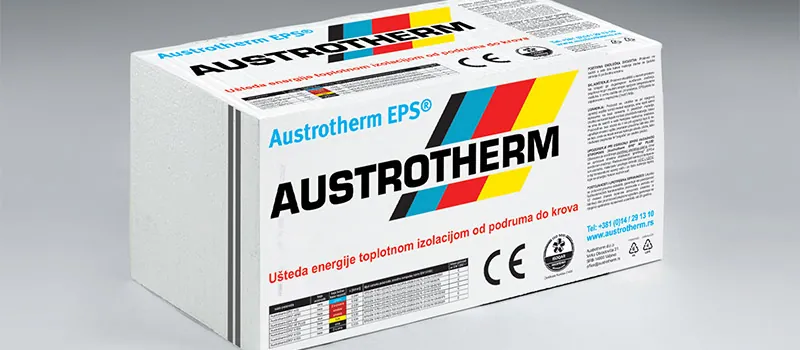 EPS / EPS PLUS
Austrotherm EPS A150
Thermal insulation board of expanded polystyrene (EPS)
- λ
- 0.033 W/mK
- Compressive strength
- 150 kPa
- Permitted load (2%)
- 40 kPa
- Fire class
- E
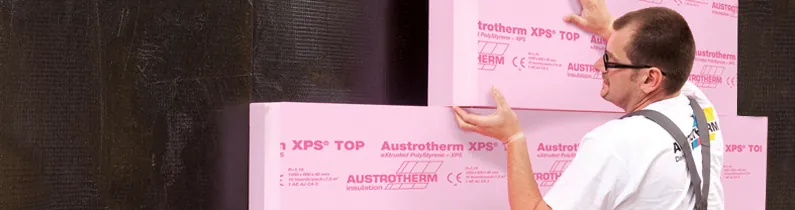 XPS TOP
Austrotherm XPS TOP 30
Thermal insulation board of extruded polystyrene with a smooth surface
- Compressive strength
- 300 kPa
- Permitted load (2%)
- 130 kPa
- Fire class
- E
Insulation advisor
Describe the job — get the right boards
Tell us what you are insulating and with what. The advisor picks from Austrotherm products only and quotes our own data; the site then works out the packs.
- Describe the building element and the situation
- Get the element, the boards and the open questions
- Calculate packs and the indicative thickness
Indicative calculation
How many packs?
Packs from our own packing lists: area ÷ m² per pack, rounded up. With a target U-value the calculator shows the indicative insulation thickness d = λ × R.
Enter the area to see the number of packs.
Indicative only — the final choice and thickness are confirmed by your designer or Austrotherm technical support. The thickness estimate takes the insulation layer alone (R = 1/U) and does not check any regulation.
The assistant needs JavaScript. Ask our technical support: Technical support · +381 (0)11 23 69 283 · All products
Private customers and contractors
We sell wholesale only. Our products are on sale at hundreds of building-material dealers in Serbia and Montenegro.
Building-material dealers
Registered companies order directly from us — with the order form and the current price list.